Forgot Your Photo Vault Code? What Can Actually Be Recovered

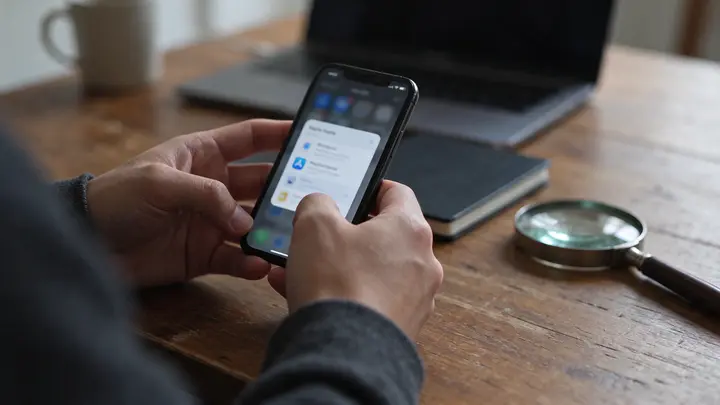
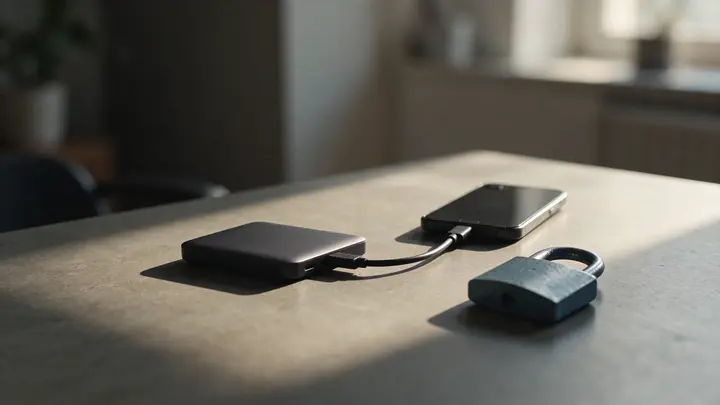
It depends on how the vault protects your photos. If it resets codes by email, you can get back in, and so can anyone who controls your email. If it truly encrypts, nobody can reset the code, and your way back is a recovery phrase or key you saved when you set it up. Without that, the photos stay locked. Save the recovery phrase on paper today.
First, Don't Panic and Don't Guess Wildly
Before anything else, check whether your vault wipes after failed attempts. Some vaults erase their key after a set number of wrong codes, which turns a forgotten code into a lost vault. If yours does, slow down. Think about what you might have used: an old phone code, a pattern you use elsewhere, an emoji sequence, a phrase with a different capital letter.
The Three Kinds of Vault
Vaults that hide. The photos sit in the app's folder, unencrypted or weakly encrypted, and the code is just a screen. Support can usually reset it by email. That's convenient, and it's also why these vaults protect so little.
Vaults that encrypt with an account. The key is protected by your account password, and the company can help with recovery through some account process. Read their recovery page carefully: the more they can help you, the more they could help someone else.
Vaults that encrypt without an account. The key comes from your code, and nobody else has it. These vaults can't reset anything, so they give you a recovery phrase, a set of words or a key, when you create the vault. That phrase is the only way back in.
If You Have the Recovery Phrase
Open the vault's recovery option, type the phrase exactly, and set a new code. Then put the phrase back where you keep it. If you used a backup, the phrase plus the backup file usually restores everything on a new phone too.
If You Don't
With a properly encrypted vault, there's no back door, no support trick and no forensic tool that will open it. That's not a failure of the app; it's the whole point. What you can still check:
- Copies outside the vault. Photos you didn't delete from Photos, chats, other devices, old computer backups.
- Exported files. If you ever exported or shared from the vault, those copies are normal photos.
- A second device. Some vaults sync to an iPad where you might still be signed in.
Set It up so This Never Happens
- Write the recovery phrase on paper. Not in Notes, not in a screenshot, not in an email to yourself. Paper, in a place you'll find in five years.
- Check it once. Some vaults ask you to confirm a few words. If yours doesn't, test the phrase on a fresh install before you rely on it.
- Make an encrypted backup. The phrase and a backup together survive a lost or broken phone.
- Use a code you can remember. A long passphrase of ordinary words is easier to remember than a short random code, and stronger.
- Tell nobody where the phrase is, unless there's someone you'd want to have access if something happened to you.
Where Hidero Fits
Hidero can't reset your code. There's no account, no email and no server that knows anything about you. When you create a vault, it shows a recovery phrase once (12 words, or 24 in Maximum mode) and checks you wrote it down. With the phrase and a backup, you can restore everything on a new iPhone. Hidero is coming to the App Store in January 2027.
Questions
Can I reset my photo vault password?
Only if the vault can read your data or keeps a reset path, like email. Vaults that truly encrypt can't reset your code; you recover with a recovery phrase or key instead.
Can Apple recover my vault code?
No. Apple doesn't have access to third-party vault codes. If the vault stores its data in iCloud as an encrypted file, Apple has the file but not the key.
Is there software that can unlock a forgotten vault?
For a vault that only hides files, sometimes. For one that encrypts with a strong key from your code, no. That's what encryption is for.
Where should I keep a recovery phrase?
On paper, somewhere safe and boring: a drawer with important documents, a safe, a sealed envelope. Not in a photo, a note or an email, which defeat the purpose.